

When investing in outdoor furniture, one question matters most: Which material will truly last? If you're comparing poly lumber vs wood outdoor furniture, you're already thinking smart. Durability, maintenance, long-term value, and overall comfort all impact not just your backyard experience—but your wallet too.
Outdoor furniture faces constant exposure to sun, rain, humidity, snow, and temperature fluctuations. Choosing the right material can mean the difference between enjoying your patio for decades or replacing furniture every few years.
In this detailed guide, we’ll break down everything you need to know about poly lumber vs wood patio furniture—so you can make the best decision for durability, comfort, and long-term return on investment.
What Is Poly Lumber Outdoor Furniture?
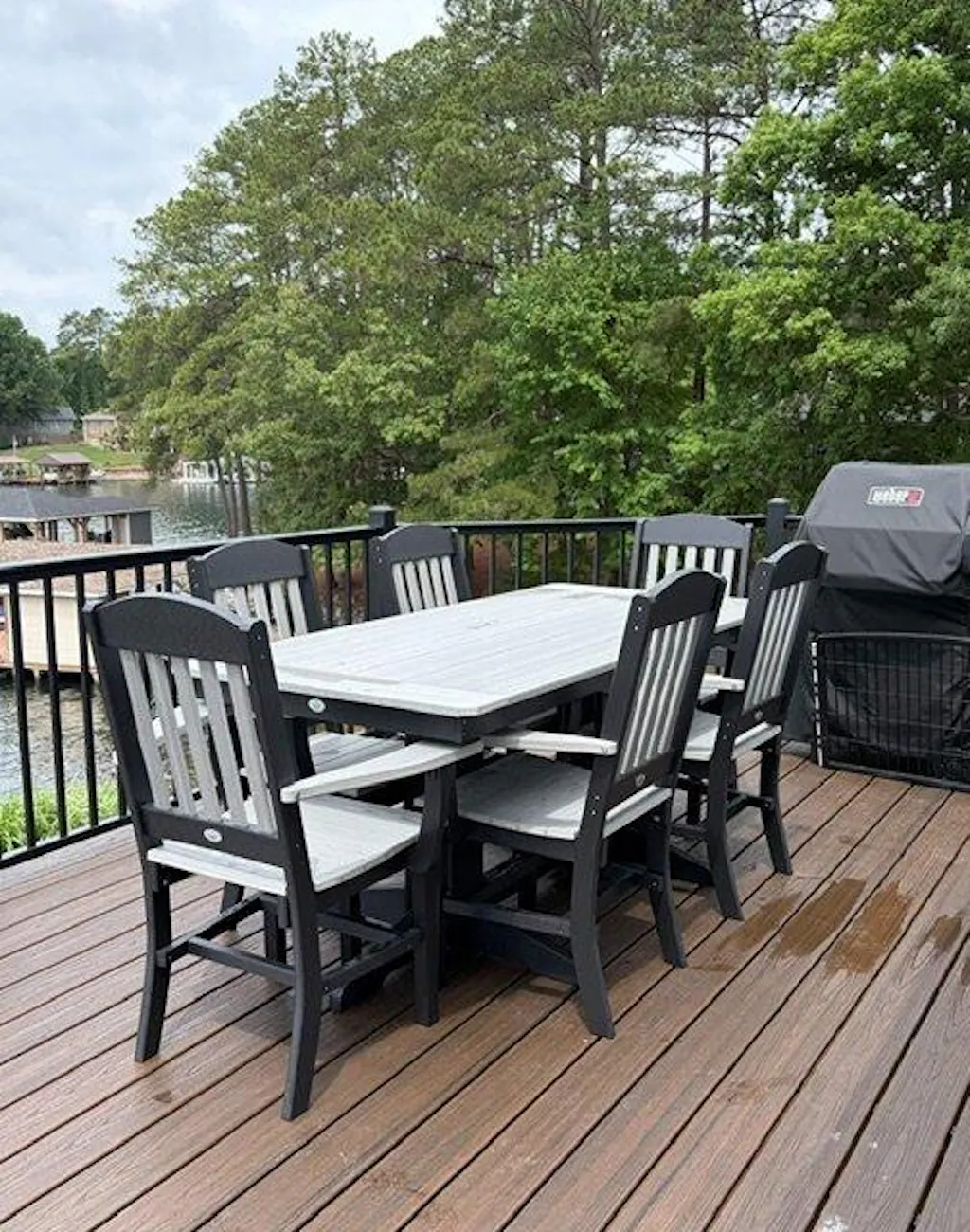
Poly lumber is a high-density recycled plastic material engineered specifically for outdoor durability. It’s designed to mimic the appearance of painted wood while offering superior resistance to weather and wear.
You’ll often see poly used in:
Unlike natural wood, poly lumber does not absorb moisture. It will not crack, splinter, rot, or attract insects. That makes it one of the most popular choices for homeowners looking for low-maintenance outdoor furniture.
Key Benefits of Poly Lumber
- Weather resistant
- Fade resistant
- No painting or staining required
- Resistant to mold and mildew
- Long lifespan (20+ years with minimal care)
If your goal is to invest once and enjoy your patio for decades, poly furniture is often considered one of the best materials for long-term use.
What Is Traditional Wood Outdoor Furniture?
Wood outdoor furniture is classic, natural, and timeless. Popular wood types include cedar, teak, pine, and hickory. Wood furniture delivers warmth and traditional charm that many homeowners love.
You’ll commonly find wood used in:
Natural wood offers authentic beauty and craftsmanship that many people prefer for front porches and rustic outdoor designs.
Key Benefits of Wood Furniture
- Natural aesthetic
- Strong structural integrity
- Custom staining options
- Traditional American craftsmanship appeal
However, wood is organic—and that means it reacts to weather.
Read More About Top 10 Outdoor Rocking Chairs for Summer
Durability Comparison: Sun, Rain & Humidity
1. Sun Exposure
Poly Lumber:
Poly furniture is UV-stabilized, meaning it resists fading and cracking even in strong sunlight. The color runs throughout the material, so it won’t peel or chip.
Wood:
Wood exposed to sun can dry out, crack, and fade over time. It requires sealing or staining to maintain its appearance.
Winner for sun resistance: Poly Lumber
2. Rain & Moisture
Poly Lumber:
Does not absorb water. No swelling, no rotting, no warping.
Wood:
Wood absorbs moisture. Over time, this can lead to rot, mold, and structural weakening—especially in humid climates.
Winner for moisture resistance: Poly Lumber
3. Humidity & Coastal Conditions
If you live in a humid or coastal environment, salt air and moisture accelerate wood deterioration.
Poly furniture remains unaffected by:
-
Salt air
-
Heavy humidity
-
Frequent rain
Winner for humid climates: Poly Lumber
Read More About Top Outdoor Rocking Chairs: Wood vs Recycled Plastic Guide
Maintenance Comparison
Poly Lumber Maintenance
- Wash occasionally with soap and water
- No sanding
- No staining
- No sealing
Maintenance level: Very Low
Wood Furniture Maintenance
- Annual sealing or staining
- Occasional sanding
- Protection from standing water
- Regular inspections for rot
Maintenance level: Moderate to High
If you prefer furniture you don’t have to “babysit,” poly is the easier long-term solution.
Cost vs Long-Term Value
Many buyers focus only on upfront cost—but the real question is long-term value.
Initial Investment
- Wood furniture is often slightly less expensive upfront.
- Poly furniture may cost more initially.
Over 10–15 Years
Wood may require:
- Sealants
- Repairs
- Replacement parts
- Full replacement if rot occurs
Poly typically requires:
- Minimal upkeep
- No refinishing costs
In the long run, poly often delivers better ROI due to its extended lifespan and low maintenance expenses.
Appearance & Style Differences
Wood: Warm & Traditional
Wood furniture offers:
- Natural grain patterns
- Rustic farmhouse charm
- Handcrafted appeal
It works beautifully for:
- Classic front porches
- Traditional homes
- Cabin-style aesthetics
Wooden rocking chairs and porch swings create a timeless Americana feel that many homeowners love.
Poly: Clean & Modern
Poly furniture offers:
- Consistent color
- Modern finish
- Sleek edges
- Contemporary outdoor appeal
It works well for:
- Modern patios
- Backyard entertaining spaces
- Poolside areas
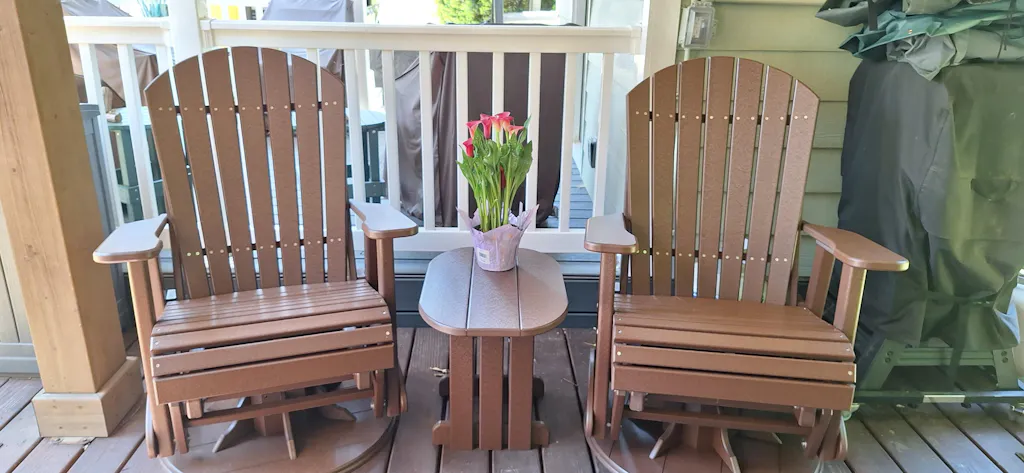
Poly Adirondack gliders and contemporary gliders fit especially well in updated outdoor designs.
Environmental Impact
Poly lumber is often made from recycled plastic materials, helping reduce landfill waste. It supports sustainability while providing durability.
Wood furniture can also be eco-friendly if sourced responsibly. However, wood harvesting must be managed carefully to remain sustainable.
Both materials can be environmentally responsible—but poly has a strong advantage in recycling benefits.
Comfort & Daily Use
Comfort depends more on design than material, but here’s how they compare:
Poly Furniture
- Solid and supportive
- Sturdy frame
- Excellent for daily use
- Stable gliding mechanisms
Poly outdoor gliders are ideal for everyday seating and high-traffic patios.
Wood Furniture
- Natural flex and comfort
- Traditional rocking motion
- Ideal for relaxation and decorative appeal
Wood porch swings offer a relaxed, nostalgic feel perfect for slow evenings.
Which Is Better for High-Traffic Use?
If you use your patio daily, host gatherings, or have children:
Poly is generally better due to scratch resistance and durability.
If your furniture is mostly decorative or used occasionally:
Wood may be a beautiful choice.
Who Should Choose Poly Lumber?
Choose poly if you want:
- Long-lasting outdoor furniture
- Minimal maintenance
- Weather resistance
- Modern patio style
- Strong return on investment
Poly is ideal for homeowners who want durability without ongoing upkeep.
Who Should Choose Wood?
Choose wood if you want:
- Traditional charm
- Rustic appeal
- Custom staining options
- Classic rocking chair aesthetics
Wood works beautifully for farmhouse and classic porch designs.
Final Verdict: Which Lasts Longer?
If durability and lifespan are your top priorities, poly lumber generally lasts longer than traditional wood in most outdoor environments.
Wood offers unmatched natural beauty—but it requires care.
Poly offers unmatched durability—with almost no effort.
For buyers focused on long-term savings, low maintenance, and weather resistance, poly is often the smarter investment.
FAQs
1. Is poly lumber better than wood for outdoor furniture?
Poly lumber is better for durability and low maintenance, while wood offers natural beauty and traditional charm.
2. How long does poly outdoor furniture last?
High-quality poly furniture can last 20 years or more with minimal maintenance.
3. Does wood outdoor furniture rot easily?
If untreated or poorly maintained, wood can rot over time due to moisture exposure.
4. Which material is better for humid climates?
Poly performs better in humid and coastal climates because it does not absorb moisture.
5. Is poly outdoor furniture worth the higher cost?
Yes. While initial costs may be higher, long-term savings from low maintenance and longer lifespan often make it more cost-effective.